
Years 4 – 5: Artificial Intelligence and the Human Author of Unisex Scents
Perhaps the most debated development concerns Artificial Intelligence. As covered by Vogue Business, AI is now capable of mapping olfactory data, accelerating formulation, and predicting consumer preference with remarkable efficiency.
Yet even within this technological momentum, there remains recognition of human intuition.
Nina Simona Briazu, perfumer at Torti Massimiliano, articulates the distinction succinctly:
“Perfumery is a sensory and emotional experience that cannot be reduced to predictive modelling – human touch remains paramount.”
While algorithms may assist in optimisation, they cannot experience the unfolding of a composition on living skin. They cannot interpret memory, atmosphere, or nuance. They cannot pause when instinct suggests restraint. In an increasingly data-driven world, authorship itself may become a defining marker of luxury. An exclusive fragrance exemplifies this human touch.
A Future Rooted in Ritual and Personalised Perfume Experiences
If the coming five years bring hyper-personalisation, sustainable molecules, and digital tools, they may also bring renewed appreciation for craftsmanship.
The future of perfumery appears poised between precision and poetry. Innovation will refine the process. But the essence – the dialogue between perfumer and wearer – is unlikely to disappear.
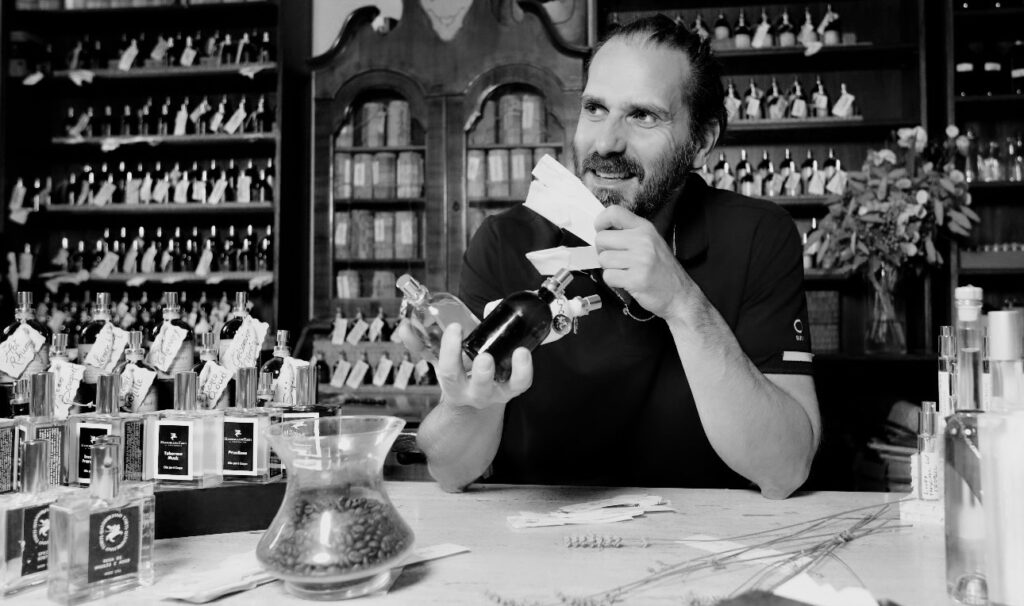
At Torti Massimiliano, fragrance remains a ritual shaped by hand, intuition, and time. The industry may evolve. The language may shift.
But the human element endures.
Exclusive Fragrance Evolution - Five Years of Personalised Perfume and Craft
The fragrance industry appears to be entering a period of quiet transformation.
Over the next five years, perfume is expected to move beyond trend cycles and seasonal launches toward something more personal: identity, emotion, and ritual. Analysts point to technological acceleration, sustainability mandates, and shifting consumer behaviour. Yet beneath these developments lies a subtler narrative – one that suggests the future of luxury fragrance may remain profoundly human.
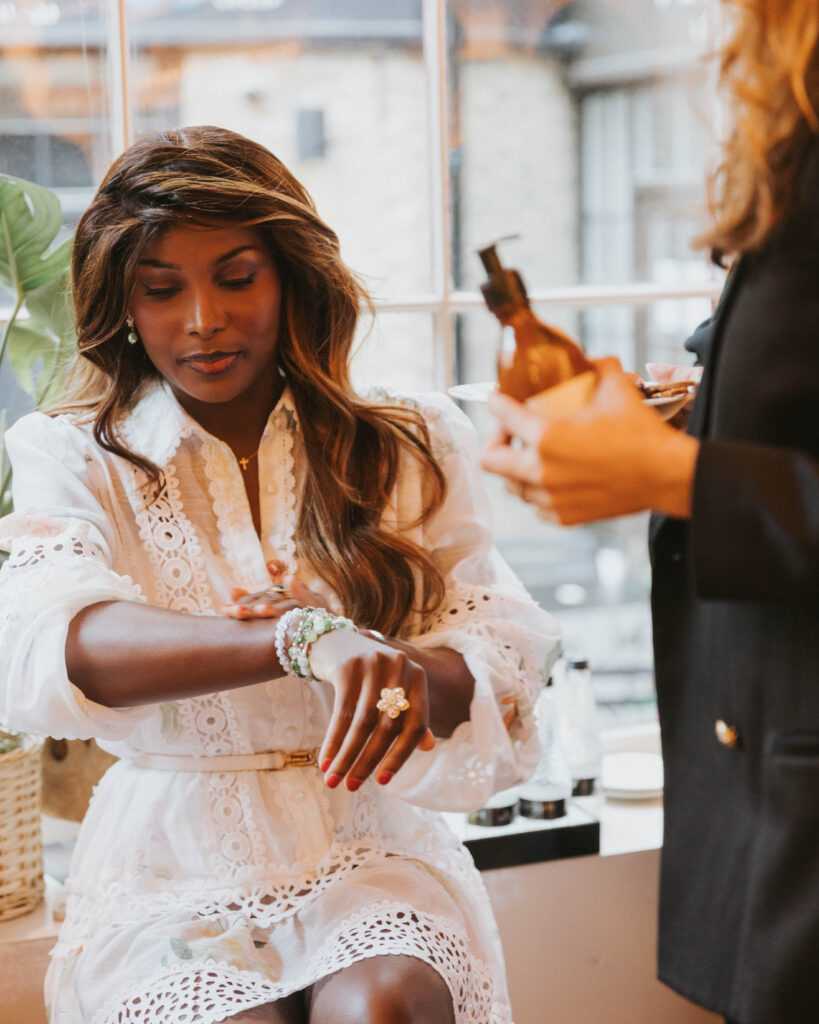
At Torti Massimiliano, this evolution feels less like disruption and more like a return to essence. We are dedicated to creating personalised perfume that is purely for the wearer, achieved through the art of layering at our London perfumery, where visitors can book a private session to explore and tailor each composition firsthand.
Years 1 – 2: Individuality and the Rise of the Fragrance Wardrobe with Personalised Perfume
Industry commentary increasingly references the decline of the single “signature scent.” In its place emerges the fragrance wardrobe – a curated selection worn according to mood, occasion, or state of mind.
Forbes highlights the growing interest in layering high-concentration perfume oils. Consumers are blending compositions to create something distinct and personal, moving away from uniformity toward authorship: “Consumers are seeking to find a scent that speaks to their own individual identity… fostering individuality and creativity” (Forbes, 2025).
For houses grounded in craftsmanship, this reinforces the value of structured formulas designed to harmonise, evolve, and respond uniquely to skin. Fragrance layering is part of this meticulous process, allowing each scent to evolve naturally.
Years 2 – 3: Emotion as a Measure of Luxury Through Fragrance Layering
Beyond individuality, fragrance is increasingly framed as emotional architecture. Publications such as Byrdie and Who What Wear note a growing appetite for mood-enhancing compositions and what some describe as fragrance “archetypes” – scents aligned with confidence, nostalgia, sensuality, or calm.
Perfume is no longer solely aesthetic; it is experiential. Scent becomes both private ritual and public expression, steadying, affirming, and anchoring. Unisex scents are embraced more widely, reflecting the desire for versatility and inclusivity.
Years 3 – 4: Premiumisation and Purpose of Exclusive Fragrance
Mid-decade projections indicate further maturation of the fragrance market. Euromonitor International describes the industry as undergoing a “green transformation,” pointing toward continued premiumisation shaped by consumers who expect transparency, ethical sourcing, and demonstrable quality. Meanwhile, Cosmetics Design Europe highlights advances in green chemistry and sustainable innovation, noting that comforting notes – gourmand accords, warm resins, softened florals – are being reinterpreted in more refined, contemporary forms.
Luxury, increasingly, may be defined not by scale but by integrity.
For artisanal perfumers, this emphasis on provenance and concentration is foundational – a commitment to raw materials selected with precision and patience.
